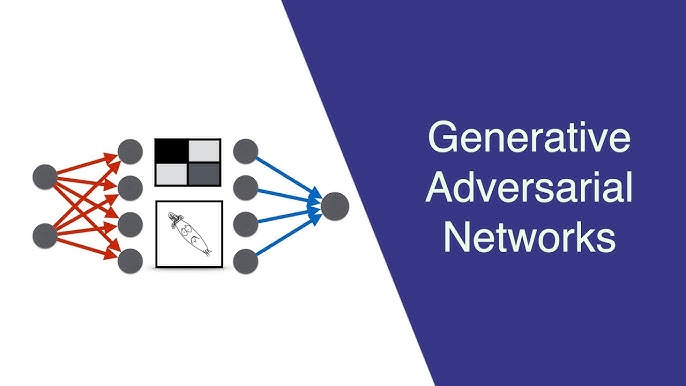
In the context of imagined image reconstruction from brain activity, the most effective approaches generally use a hybrid framework that leverages both Deep Neural Networks (DNNs) for feature decoding and Generative Adversarial Networks (GANs) as an image prior. GANs excel at generating realistic, high-quality images, addressing the limitations of methods that produce blurry or unnatural results, while DNNs provide the necessary framework for decoding complex neural features.
Role of DNNs
- Feature Extraction and Decoding: DNNs (like VGG19 or CLIP models) are primarily used as pre-trained “comparator” networks to extract multi-layer visual features from images.
- Mapping Brain Activity to Feature Space: Linear models or other decoders are trained to map recorded brain activity (fMRI data) to these specific, high-level feature spaces within the DNN.
- Loss Calculation: The difference (loss) between the features of the generated image and the decoded brain features is calculated using the DNN’s feature space. This “feature loss” is crucial for accurate reconstruction and has been shown to play a critical role in achieving high accuracy.
Role of GANs
- Image Generation and Realism: GANs are employed as powerful generative models (often a Deep Generator Network, or DGN) that can produce clear and natural-looking images.
- “Natural Image Prior”: The pre-trained generator acts as a “natural image prior,” effectively constraining the possible output images to a learned latent space of realistic images. This prevents the generation of noisy or distorted images that might result from a direct pixel-wise reconstruction from noisy fMRI data alone.
- Optimization Framework: The reconstruction process involves an optimization loop where an image generated by the GAN’s generator is iteratively refined until its DNN features match those decoded from the brain activity.
Comparison for Imagined Image Reconstruction
| Feature | Traditional DNN-based Methods (without GAN prior) | Hybrid Methods (DNN + GAN prior) |
|---|---|---|
| Image Realism | Can suffer from over-smoothing and often produce blurry or less natural-looking images. | Generate significantly more naturalistic and high-quality images due to the GAN’s learned image distribution. |
| Reconstruction Accuracy (Human Judgment) | Generally lower subjective assessment scores; human evaluators rate images as less realistic. | Higher subjective assessment scores; images are more often judged as “real” or closer to the target image. |
| Reconstruction Accuracy (Pixel-wise) | Sometimes show slightly higher pixel-wise correlation scores, but the images lack perceptual quality. | Pixel-wise correlation might be slightly lower than some pure optimization methods, but perceptual and semantic quality is much higher. |
| Training Data Efficiency | May require a direct end-to-end mapping from fMRI to image, which can be data-hungry. | Can utilize a pre-trained GAN, which helps to work with potentially limited neuroimaging data for the final mapping. |
Conclusion
For the specific task of imagined image reconstruction, where the goal is to produce a visually convincing representation of a mental image, GANs are superior at generating high-fidelity, realistic results, especially when used in a hybrid approach with DNN feature decoding. Pure DNN approaches struggle to produce perceptually realistic images, even if they sometimes achieve high pixel-wise correlation metrics.
Generative Adversarial Networks (GANs) are deep learning models with two competing neural networks—a generator and a discriminator—that train against each other to create new, synthetic data that resembles a given real dataset. The generator creates fake data (like images or text) from random noise, while the discriminator tries to distinguish these fakes from real data. This adversarial process pushes the generator to improve until its generated samples are nearly indistinguishable from real ones, enabling applications from realistic image generation to data augmentation and security. [1, 2]
How GANs Work: The Counterfeiter and the Cop Analogy
- The Generator (Counterfeiter): Starts by taking random noise and transforming it into a data sample, like a fake painting.
- The Discriminator (Cop): Receives both real samples from the dataset and fake samples from the generator. Its job is to correctly label each as “real” or “fake”.
- Adversarial Training:
- The generator learns to create better fakes to fool the discriminator.
- The discriminator learns to become better at detecting even sophisticated fakes.
- The Outcome: This continuous game of improvement leads to a generator capable of producing highly realistic, novel data. [2, 3, 4, 5]
Key Components
- Generator Network: Creates new data samples, like images or text, from random input.
- Discriminator Network: A classifier that evaluates whether a given sample is from the real dataset or generated by the generator. [2, 4, 5]
Benefits
- Realistic Data Generation: Creates highly convincing synthetic data.
- Improved Data Quality & Diversity: Can generate more diverse and realistic datasets.
- Data Efficiency: Can create new data without needing vast amounts of real-world data. [5, 6, 7, 8, 9]
Challenges
- Training Instability: The adversarial nature can make training difficult and unstable.
- Mode Collapse: The generator might get stuck producing only a limited variety of outputs. [10, 11, 12]
Common Applications
- Image Generation: Creating realistic faces, artwork, or manipulating existing images.
- Video Synthesis: Generating new video content.
- Natural Language Processing: Generating text and speech.
- Data Augmentation: Creating more training data for other machine learning models.
- Healthcare: Generating realistic medical images for training or simulation. [5, 6, 13]
[1] https://cloud.google.com/discover/what-are-generative-adversarial-networks
[2] https://www.youtube.com/watch?v=8L11aMN5KY8
[3] https://www.youtube.com/watch?v=RAa55G-oEuk
[4] https://www.geeksforgeeks.org/deep-learning/generative-adversarial-network-gan/
[5] https://www.youtube.com/watch?v=TpMIssRdhco
[6] https://en.wikipedia.org/wiki/Generative_adversarial_network
[8] https://www.q3tech.com/blogs/vaes-vs-gans/
[9] https://link.springer.com/chapter/10.1007/978-3-031-71729-1_1
[10] https://poloclub.github.io/ganlab/
[11] https://www.youtube.com/watch?v=OW_2zFqQ1TA
[13] https://www.youtube.com/watch?v=h45beyEeM1I
- Improved image reconstruction from brain activity through automatic …Feb 9, 2025 — Visual image reconstruction with deep neural network For visual reconstruction, we used a similar method to the one out…
National Institutes of Health (.gov)
- Applications of generative adversarial networks in neuroimaging …Concatenation of c x 1 and s x 1 are used as input for reconstruct x1 through G2. Same process also applies to the reverse directi…
- Deep image reconstruction from human brain activityJan 13, 2019 — The five columns of reconstructed images correspond to reconstructions from five subjects. … S4 Fig. Reconstruction …
PLOS
- End-to-End Deep Image Reconstruction From Human Brain ActivityApr 11, 2019 — Here, we directly trained a DNN model with fMRI data and the corresponding stimulus images to build an end-to-end reco…
National Institutes of Health (.gov)
- End-to-End Deep Image Reconstruction From Human Brain ActivityApr 11, 2019 — While the main purpose of this study is to evaluate the potential of the end-to-end method in learning direct mapping …
- Natural Image Reconstruction From fMRI Using Deep Learning – NIH(2000). Also, a pretrained comparator network C, based on AlexNet, was introduced as a feature-matching network to compute the fea…
- Deep image reconstruction from human brain activityJan 13, 2019 — In another test session, a mental imagery task was performed. The decoders were trained using the fMRI data from the t…
www.tedcloak.com
- Generative adversarial networks for reconstructing natural images …Aug 4, 2025 — Abstract. We explore a method for reconstructing visual stimuli from brain activity. Using large databases of natural i…
ResearchGate
- (PDF) Mental image reconstruction from human brain activityJan 21, 2023 — * Fig. 1 | Proposed reconstruction framework. ( a) Decoder training. In our framework, brain. * activity is translated…
ResearchGate
- A Hybrid Approach for Underwater Image Enhancement using CNN and GANA hybrid technique is proposed in this paper that blends both designs to gain advantages of the CNN and GAN ( generative adversari…
The Science and Information (SAI) Organization
- A Future Picture: A Review of Current Generative Adversarial Neural …Specific loss functions tailored to clinical applications, like the Structural Similarity Index (SSIM) loss, have also been employ…
- Deep-Learning Computational Holography: A ReviewMar 27, 2022 — The deep image prior ( Ulyanov et al., 2018) initializes the DNN with random values and inputs a fixed image to the DN…
Frontiers
- Comprehensive Review of EEG-to-Output Research: Decoding Neural Signals into Images, Videos, and AudioDec 27, 2024 — 4.1 Strengths and Limitations of Current Approaches The field of EEG-to-output decoding has seen tremendous progress o…
arXiv
- A Friendly Introduction to Generative Adversarial Networks …May 4, 2020 — and the other one the discriminator. and they behave a lot like a counterfeeder and a cop the counterfeeder is constant…
YouTube·Serrano.Academy
1m
- Generative adversarial network – WikipediaCompared to fully visible belief networks such as WaveNet and PixelRNN and autoregressive models in general, GANs can generate one…
Wikipedia
- What are GANs (Generative Adversarial Networks)?Nov 10, 2021 — and we feed that into our model model our model then makes a prediction in the form of output. and we can compare the …
YouTube·IBM Technology
6m
- Generative Adversarial Network (GAN)Oct 8, 2025 — 1. Generator’s First Move * Generator’s First Move. The generator starts with a random noise vector like random numbers…
GeeksforGeeks·GeeksforGeeks
12:55
- Understanding GANs (Generative Adversarial Networks …Oct 20, 2024 — imagine you’re a counterfeit. and your objective is to sneak some fake money past the police. if you’re the police you…
YouTube·DeepBean
26:46
- GAN Lab: Play with Generative Adversarial Networks in Your Browser!Jan 14, 2019 — How is it implemented? GAN Lab uses TensorFlow. js, an in-browser GPU-accelerated deep learning library. Everything, f…
Polo Club of Data Science @ Georgia Tech
- Generative Adversarial Networks | Tutorial with Math …Dec 25, 2023 — these two models become each other’s adversaries as their goals are exactly the opposite of each other. and in order t…
YouTube·ExplainingAI
1m
- What are generative adversarial networks (GANs)? – Google CloudWhat are generative adversarial networks (GANs)? Generative adversarial networks (GANs) are a type of deep learning architecture t…
Google Cloud
- VAEs vs. GANs: Which is the Best Generative AI Approach?Jul 31, 2024 — 1. The Generator: Crafting Realistic Data The generator within a GAN is tasked with creating synthetic data samples fr…
Q3 Technologies
- Top 5 Advantages of GANs in 2023 – Rapid Innovation4. Top 5 Benefits of Generative Adversarial Networks (GANs) * Realistic Data Generation. One of the most impressive benefits of GA…
Rapid Innovation
- Advancing Predictive Maintenance in the Oil and Gas Industry: A Generative AI Approach with GANs and LLMs for Sustainable DevelopmentSep 17, 2024 — The generator creates synthetic data, and the discriminator distinguishes between real and generated data. This advers…
SpringerLink
- 26. Generative Adversarial NetworksMar 11, 2024 — crazy including in material science which will be our next video. so let’s dive into how GANs work what are they how d…
YouTube·Taylor Sparks
12m
- Transforming Artificial Intelligence with Generative Adversarial NetworksOct 29, 2024 — Challenges with GANs Mode Collapse: The generator produces a limited varieties of outputs, reducing the diversity of t…
CloudThat
Comprehensive Review of EEG-to-Output Research: Decoding Neural Signals into Images, Videos, and Audio
Yashvir Sabharwal
11
Balaji Rama
22
Yashvir Sabharwal
††
Balaji Rama
11
Abstract
Electroencephalography (EEG) is an invaluable tool in neuroscience, offering insights into brain activity with high temporal resolution. Recent advancements in machine learning and generative modeling have catalyzed the application of EEG in reconstructing perceptual experiences, including images, videos, and audio. This paper systematically reviews EEG-to-output research, focusing on state-of-the-art generative methods, evaluation metrics, and data challenges. Using PRISMA guidelines, we analyze 1800 studies and identify key trends, challenges, and opportunities in the field. The findings emphasize the potential of advanced models such as Generative Adversarial Networks (GANs), Variational Autoencoders (VAEs), and Transformers, while highlighting the pressing need for standardized datasets and cross-subject generalization. A roadmap for future research is proposed that aims to improve decoding accuracy and broadening real-world applications.

keywords: EEG, image reconstruction, video synthesis, audio decoding, generative models, neural interfaces

License: CC BY-NC-SA 4.0
arXiv:2412.19999v1 [cs.CV] 28 Dec 2024