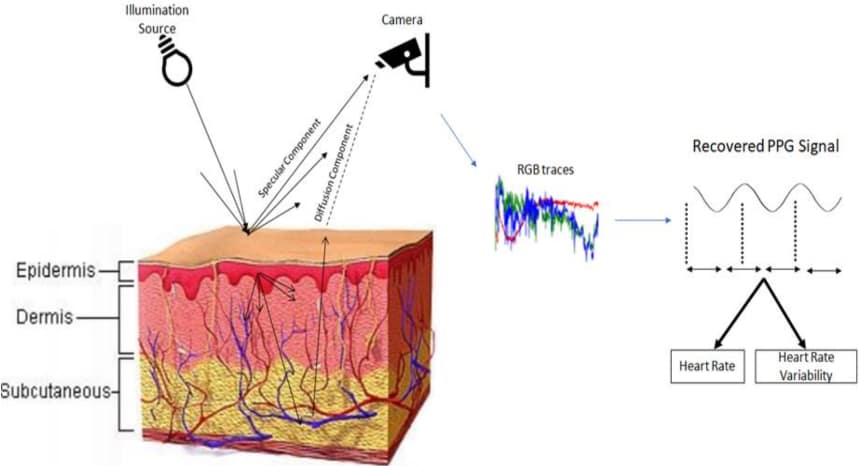
Photoplethysmography (PPG) is a simple, non-invasive optical technique used to measure volumetric changes in blood circulation in peripheral tissues. It provides a waveform that correlates with blood flow, from which various physiological parameters can be derived.
Principle of Operation
A PPG sensor typically uses a light source (light-emitting diode, or LED) and a light detector (photodetector) placed on the skin’s surface, such as a fingertip, earlobe, or wrist.
- Light Transmission/Reflection: The LED emits light (commonly green, red, or infrared) into the tissue. This light is partially absorbed by various skin components, with blood absorbing light more strongly than surrounding tissues like bone and muscle.
- Pulsatile Blood Flow: With each heartbeat, the volume of arterial blood in the microvascular bed changes (increases during systole, decreases during diastole).
- Detection: The photodetector measures the changes in the intensity of the transmitted or reflected light. The detected light intensity fluctuates in sync with the cardiac cycle, generating a characteristic PPG waveform with pulsatile (AC) and non-pulsatile (DC) components.
- Signal Analysis: This raw signal is then amplified, filtered, and processed to extract physiological information.
Types of PPG Sensors
- Transmission Mode: The light source and detector are placed on opposite sides of the tissue (e.g., fingertip, earlobe). This is typically used in traditional pulse oximeters.
- Reflectance Mode: The light source and detector are on the same side, measuring the light scattered or reflected back from the tissue. This is the mode commonly used in smartwatches and fitness trackers.
- Imaging PPG (iPPG) / Contactless PPG (cPPG): This method uses a standard camera (like on a smartphone) to remotely detect subtle skin color changes caused by blood flow variations, requiring no direct contact with the skin.
Applications and Uses
PPG is a versatile and widely used technology, found in both clinical and consumer-grade devices:
- Heart Rate (Pulse Rate) Monitoring: The most common application, where the frequency of the pulse in the waveform is used to determine heart rate.
- Pulse Oximetry: By using multiple wavelengths of light (typically red and infrared), the device calculates the ratio of oxygenated to deoxygenated hemoglobin to estimate blood oxygen saturation (SpO₂) levels.
- Heart Rate Variability (HRV): Analysis of the time intervals between consecutive pulses can provide insights into autonomic nervous system activity.
- Blood Pressure Estimation: Advanced signal processing and machine learning algorithms are being developed to estimate blood pressure from the PPG waveform, often without a cuff.
- Vascular Health Assessment: Analysis of the waveform shape and its derivatives can help assess arterial stiffness and detect signs of cardiovascular diseases.
- Respiratory Rate Monitoring: Respiration causes variations in the PPG waveform, allowing for the estimation of breathing rate.
- Sleep and Stress Monitoring: PPG data is used in sleep tracking devices to estimate sleep stages and to help assess stress levels.
Limitations
Despite its convenience and low cost, PPG is susceptible to several factors that can affect signal quality, especially in wearable devices:
- Motion Artifacts: Body movements or sensor displacement can easily corrupt the signal.
- Skin Tone: Melanin in darker skin can absorb more light (especially green light), potentially affecting the accuracy of some measurements, particularly oxygen saturation.
- Poor Perfusion: In conditions like shock or hypothermia, reduced peripheral blood flow can lead to a weak or undetectable signal.
- External Light: Ambient light can interfere with the sensor’s light detection.