
The National Geospatial-Intelligence Agency (NGA) is a U.S. intelligence agency responsible for collecting, analyzing, and distributing geospatial intelligence (GEOINT). It provides imagery and mapping data crucial for national security, military operations, disaster response, and policymaking. The NGA supports both the U.S. Department of Defense and the broader Intelligence Community.
Key facts
- Founded: 1996 (as National Imagery and Mapping Agency; renamed NGA in 2003)
- Headquarters: Springfield, Virginia, USA
- Parent Department: U.S. Department of Defense
- Director (2024): Vice Admiral Frank D. Whitworth III
- Primary focus: Geospatial intelligence (GEOINT) for national security
Mission and Role
The NGA’s mission is to deliver timely, accurate, and actionable geospatial intelligence. GEOINT combines imagery, maps, and analysis to understand the Earth’s features and human activity. The agency’s data supports U.S. military targeting, navigation, humanitarian assistance, and global situational awareness. It also plays a key role in counterterrorism and disaster relief.
History and Evolution
Initially formed through the consolidation of various imagery and mapping organizations, the NGA evolved to meet modern intelligence demands. Its transformation from the National Imagery and Mapping Agency in 2003 reflected an expanded focus on advanced geospatial analysis and integration with digital technologies, satellite imagery, and AI-driven analytics.
Operations and Partnerships
NGA collaborates extensively with the U.S. military, other intelligence agencies, and international allies. It manages global satellite imagery, airborne reconnaissance data, and geographic databases. The agency also partners with private-sector technology firms and academic institutions to advance remote sensing, 3D mapping, and data visualization capabilities.
Strategic Importance
As digital mapping and satellite technologies advance, the NGA remains central to national defense and global intelligence efforts. Its work underpins U.S. military precision, border security, and environmental monitoring, while also supporting public-sector disaster response and scientific research.

In Other News:
In-Q-Tel
In-Q-Tel (IQT) is a not-for-profit strategic investment firm founded by the Central Intelligence Agency in 1999 to accelerate the adoption of commercial innovation within the U.S. Intelligence Community. Based in Arlington, Virginia, it acts as a bridge between government agencies and emerging technology companies to enhance national security capabilities.
Key facts
- Founded: 1999, Arlington, Virginia
- Structure: Independent 501(c)(3) nonprofit corporation
- Funding: Primarily via CIA contracts and other U.S. intelligence agencies
- Investments: 800+ startups; 500+ technologies transitioned to use
- CEO (2025): Steve Bowsher
Origins and mission
Created under CIA Director George Tenet, In-Q-Tel arose from concern that U.S. intelligence acquisition cycles lagged behind Silicon Valley innovation. Named after “Q,” the fictional gadget maker from James Bond, the organization’s mission is to identify, adapt, and deliver cutting-edge commercial technologies to intelligence and defense agencies faster than traditional procurement allows.
Investment approach
Unlike traditional venture funds, IQT reinvests returns into new projects rather than seeking profit. It typically makes small, early-stage investments—often $250 K – $3 M—paired with technical agreements to refine products for government use. For every public dollar IQT invests, roughly $18 in private venture capital follows, amplifying impact across sectors.
Technology focus
IQT’s portfolio spans artificial intelligence, cybersecurity, biotechnology, quantum computing, microelectronics, advanced materials, and space systems. It partners with agencies such as the National Security Agency, Defense Intelligence Agency, National Geospatial-Intelligence Agency, and Department of Homeland Security, as well as allied programs in the U.K. and Australia.
Notable outcomes and influence
In-Q-Tel’s early backing helped launch technologies later commercialized as Google Earth (via Keyhole Inc.) and supported major defense-tech firms such as Palantir Technologies and Anduril Industries. The firm is credited with teaching U.S. agencies “agile” innovation methods and reshaping how government accesses cutting-edge tools. Its nonprofit model prioritizes mission adoption and life-saving capability over financial return.
- www.anomali.comAnomali Secures Strategic Investment by In-Q-Tel | AnomaliREDWOOD CITY, Calif. – August 9, 2016 – Anomali, the provider of the market-leading ThreatStream threat intelligence and Anomali Match platforms, announced today its technology development agreement w…
- www.afcea.orgIntelligence Agency Seeds Technology Entrepreneurs | AFCEA InternationalINTELLIGENCE AGENCY SEEDS TECHNOLOGY ENTREPRENEURS Faced with rapidly changing information technology needs, the Central Intelligence Agency is serving as a venture catalyst to help fund private sect…
- www.life-sciences-benelux.comIn-Q-Tel (IQT) – [LSBNL] Life-Sciences-Benelux.com – The Benelux Life Sciences Web PortalZum Inhalt * About us * Contact TOP NEWS * Atai Life Sciences and Beckley Psytech Complete Merger * Braveheart Bio Launches with $185M Series A Financing * Qiagen Reports 2025 Q3 Results and Looks…
- www.bloomberg.comIn-Q-Tel Inc – Company Profile and News – Bloomberg MarketsSkip To Content Skip to content Bloomberg the Company & Its ProductsThe Company & its ProductsBloomberg Terminal Demo RequestBloomberg Anywhere Remote LoginBloomberg Anywhere LoginBloomberg Customer…
- fortune.comThe CIA-backed venture fund that helped launch Palantir and Google Earth | FortuneVenture Capital MEET THE CIA-BACKED VENTURE FUND BEHIND PALANTIR, ANDURIL—AND A SPY TOOL THAT MIGHT BE ON YOUR PHONE By Erik German July 29, 2025, 6:00 AM ET Add us on In-Q-Tel CEO Steve Bowsher…
- battery-tech.netIQT (In-Q-Tel) – Battery-Tech NetworkIQT (IN-Q-TEL) * VC & Investors IQT (In-Q-Tel) is a not-for-profit investor that connects the U.S. Intelligence Community with tech startups. It funds and guides AI, cybersecurity, quantum, space an…
- defensetechsignals.beehiiv.comIn-Q-Tel – America’s Original Defense Tech InvestorLoginSubscribe * Defense Tech Signals * Posts * Defense Tech Signals DEFENSE TECH SIGNALS ISSUE #30 | IN-Q-TEL Kyle Briggs September 23, 2025 • Reading Time: 7 minutes EDITOR’S BRIEF Last Week w…
- www.whiteroseintelligence.comIn-Q-TelSkip to main content In-Q-Tel (IQT) is an American not-for-profit venture capital firm based in Arlington, Virginia owned by the Central Intelligence Agency (CIA). HISTORY In 1998, Sue Gordon “de…
- platform.dkv.globalIn-Q-Tel | Companies | MindmapsIN-Q-TEL ^{ COMPANIES } In-Q-Tel is a not-for-profit organization that partners with companies developing cutting-edge technologies to deliver solutions to the Central Intelligence Agency and the bro…
- golden.comIn-Q-Tel | GoldenLog inEnquire now IN-Q-TEL In-Q-Tel (IQT), formerly Peleus and known as In-Q-It, is an American not-for-profit venture capital firm based in Arlington, Virginia.
In even more Other Other News:
MIT Lincoln Laboratory
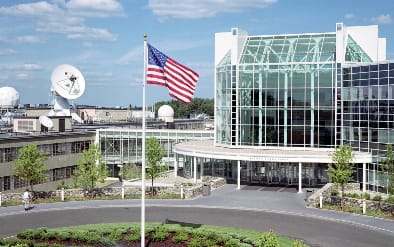
MIT Lincoln Laboratory is a federally funded research and development center (FFRDC) operated by the Massachusetts Institute of Technology in Lexington, Massachusetts. It develops advanced technologies in support of U.S. national security, emphasizing prototype systems and applied research that transition into military and civilian use.
Key facts
- Founded: 1951
- Location: Lexington, Massachusetts, on Hanscom Air Force Base
- Operator: Massachusetts Institute of Technology (MIT)
- Employees: ~4,500 (FY 2024)
- Primary sponsor: U.S. Department of Defense
Mission and focus
MIT Lincoln Laboratory’s mission is “technology in support of national security.” Its research spans air, missile, and maritime defense; space systems; communications; cybersecurity; intelligence and reconnaissance; homeland protection; and biotechnology. Ninety percent of its funding derives from the Department of Defense, and it maintains close partnerships with military services and industry to field-test and transition innovations.
Research and facilities
The laboratory integrates concept design with operational prototyping. Notable achievements include creating the first dual-band radar and high-brightness beam-combining laser. Facilities include a 200 mm semiconductor fabrication line, airborne test-bed aircraft, a supercomputing center, and the Lincoln Space Surveillance Complex. Its microelectronics programs support quantum, photonic, and gallium-nitride technologies under trusted supplier accreditations.
Organization and leadership
MIT Lincoln Laboratory operates under the MIT Office of the President. Leadership includes Director Melissa Choi, Assistant Directors Justin Brooke, Marc Viera, and Scott Anderson, advised by committees representing defense, government, and academia.
Legacy and impact
Founded during the Cold War to develop the nation’s first air defense computer systems, the Laboratory has pioneered technologies influencing computing, radar, and communications. Its mission endures more than seven decades later, continuing to safeguard national security while fostering innovation across science and engineering.
- facts.mit.eduLincoln Laboratory – MIT FactsHome / MIT’s Lincoln Laboratory, in Lexington, Massachusetts, is a federally funded research and development center (FFRDC) that develops advanced technology to address national security needs. Its c…
- www.ll.mit.eduAbout | MIT Lincoln LaboratoryMIT Lincoln Laboratory is open. MIT Lincoln Laboratory is open. Hanscom Air Force Base has declared Force Protection Condition Bravo. Yes ABOUT TECHNOLOGY IN SUPPORT OF NATIONAL SECURITY MIT Lin…
- www.ll.mit.eduOrganization | MIT Lincoln LaboratoryMIT Lincoln Laboratory is open. MIT Lincoln Laboratory is open. Hanscom Air Force Base has declared Force Protection Condition Bravo. Yes ORGANIZATION Lincoln Laboratory is organized into technic…
- www.ll.mit.eduHomepage | MIT Lincoln LaboratoryMIT Lincoln Laboratory is open. MIT Lincoln Laboratory is open. Hanscom Air Force Base has declared Force Protection Condition Bravo. Yes R&D DEFENDING THE NATION FROM MISSILE THREATS Read more…
- catalog.mit.eduLincoln Laboratory | MIT Course CatalogResearch and Study Catalog Navigation LINCOLN LABORATORY MIT’s Lincoln Laboratory, in Lexington, MA, is operated as a federally funded research and development center for advanced technologies in s…
- web.mit.eduMIT Facts 2013: Lincoln Laboratory| LINCOLN LABORATORY MIT’s Lincoln Laboratory, located in Lexington, Massachusetts, is a federally funded research and development center focused on applying advanced technology to problems of natio…
- www.indeed.comMIT Lincoln Laboratory Mission, Benefits, and Work Culture | Indeed.comStart of main content See more about… * News & Updates * About Us * Working at Lincoln Laboratory * Culture * Development * Social Media * MIT Lincoln Laboratory Jobs * Company Details ABOUT MIT…
- www.mit.eduSpotlight: Lincoln Lab anniversary | MIT – Massachusetts Institute of TechnologySkip to content ↓ * More ↓ Menu ↓ Menu SPOTLIGHT: JUL 26, 2024 Lincoln Laboratory was established on July 26, 1951, as a federally funded R&D center managed by MIT for the Department of Defense…
- www.mit.eduSpotlight: Lincoln Lab anniversary | MIT – Massachusetts Institute of TechnologySkip to content ↓ * More ↓ Menu ↓ Menu Updates from campus: Read messages from MIT’s leaders regarding recent events on campus, sharing relevant policies, and correcting misinformation. SPOTLIGHT…
- www.semi.orgMIT Lincoln Laboratory | SEMIMIT LINCOLN LABORATORY MEMBER SINCE Jan 1, 2018 MEMBER ID 16943 WEBSITE